Friday, December 18, 2015

Today's digging

I worked hard at the dig site today with shovel and trowel digging in privies. We naturally discovered a lot of broken pottery and glass with lots of cooked bones. More interesting things were buttons, a doll arm and what looked like a bayonet.
These two complete bottles were very nice.
As was this wine bottle also in great shape.
One of our diggers deep in an old privy.
It was a great day, now it is nice to be home resting.

Thursday, December 17, 2015

My New Dig

Up to now all my digging has been in the Holy Land but I was invited to do a historical dig here in Louisville and spent Wednesday digging there and will go back there again. This is a downtown site where the land is being cleared to build an new and very large hotel. Evidence of previous building calls for an archaeological dig to see what is there. in the 1820's new homes were built on the south side of what was then Louisville and is now downtown. These were the home of well to do business people. At that time they did not have trash pickup for anyone and no indoor plumbing. Privies were out back and all kinds of waste went down the hole.
This privy was build before 1853 and we can tell that because it was not lined with bricks.
This one was built after Louisville passed a law that made all new privies be lined with brick. Digging these out will be interesting. We will be able to tell a lot about their daily life by what we find in them.

Monday, November 23, 2015

Digging again

While visiting the Portland Museum in Louisville the guide said that she is an archaeologist and talked about digging slave quarter sites in Kentucky. In a conversation she told me about the Kentucky Archaeological Survey about to dig on the new construction site at the Louisville Omni Hotel. She gave me the email address of the director of the dig and I have been accepted. They have found three 19th century privies that they will dig up and sift. Since people use to throw all kinds of things down a privy we may well find a lot of interesting stuff. I will likely be doing a lot of sifting and sorting the objects found. It will be great to once again be digging even if it is not Petra or Israel.

Thursday, March 7, 2013

The Petra Temple

The Temple of the Winged Lions from the air.
This is the archaeological site I worked on in 2002 and 2005

Tuesday, June 26, 2012

Dr. Philip C. Hammond

Dr. Philip C. Hammond was the Director of the Temple of the Winged Lions excavation in Petra Jordan.


He had been excavating archaeological sites in Jordan for more than fifty years when this picture was taken. This was the last time he visited the dig site in 2005. Sadly he died before we could return.

Dr. Hammond was an awesome archaeologist and I learned a lot from him in the two years I dug with him and the summer I visited his home for a week and studied his library and samples from the dig.  I long to go back to Petra and finish the dig. It is almost done but no one is digging there now. Some day!


Friday, June 15, 2012

Ten Years Ago

It is time to walk down memory lane of ten years ago when I was on my second trip to Petra and my first to dig with Dr. Hammond at the Temple of the Winged Lions.
Seated at the table are Lin Hammond the dig administrator, Dr. Philip Hammond the dig director and Eudora Struble the Field Supervisor. This picture was taken in Amman the night before drove to Petra.

Eudora was a young woman whom I met on my dig in Ashkelon in 1999 and we remain friends. She is now writing her doctoral dissertation for the University of Chicago.

Six weeks of excavation were ahead of us and they were the leadership team that kept us on track and very active.

Monday, March 5, 2012

Another Papyrus Ebers Rx


A Remedy to Regulate Evacuation

Honey
Sasa-seeds
Wormwood
Elderberry
Berries of the uan-tree
Kernel of the ut’ait fruit
Caraway
Aaam seed
Xam seed
Sea salt

Form into a suppository and put into the rectum.


I wondered when those suppositories were invented. 3400 BC! Doctors!!!

Sunday, March 4, 2012

Recipes from "The Papyrus Ebers"

I received a Christmas gift from my youngest darling daughter in the form of a book about an archaeology find of Egyptian Papyrus dating from about 3400 BC. The papyrus is a book of recipes for a doctor to prescribe for various aliments of the day. I will begin to share some of them with you over the next week.

For Constipation

A Remedy to clear out the body and get rid of the excrement in the body of a person:

Take the berries of the Castor oil tree – Chew and swallow down with beer in order to clear out all that is in the body.

Some things never change! 

Monday, November 28, 2011

Future Digs

Always in my mind I am looking forward to the next dig. When and where that will be I still do not know I only know that I long to go dig in the dirt.


There is a dig in Petra that I would love to finish but it looks like it will take a very long time before another university picks up the license to dig there. As I turn 70 on my next birthday I begin to wonder if I will get that chance. I am encouraged by having worked with others who were digging well into their eighties.


Sunday, November 27, 2011

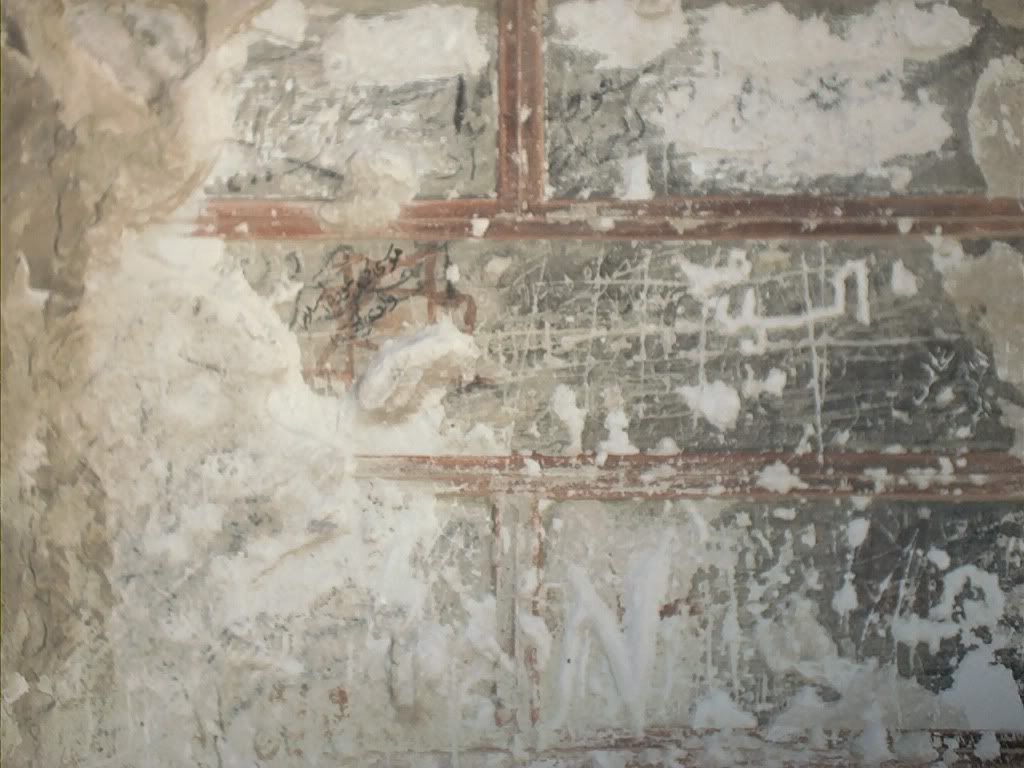
Roman Fresco in Petra

In this picture you see what is left of a fresco on an inside wall of a Roman Administration Building in Petra.

The rather rough wall was covered with very thick plaster to even it out and then had wonderful paintings all over it. To colors were brilliant and the scenes enchanting. 

This was one of many that were being removed for preservation and study at Brown University. Once the fresco's are uncovered the weather would have destroyed them in short order. 

I was glad that I was there to see it in place before it was removed.

Thursday, November 3, 2011

The Bible in Jesus Day

Before the Roman destruction of the Jerusalem Temple in 70 A.D. there was no one list of sacred books that was considered authoritative. At that time there was, as yet, no clear order between Biblical books and non-biblical books. Even though all Jews accepted the Torah, or the Five Books of Moses, as the scriptural underpinning of Jewish ritual and daily life, the scrolls show that numerous variants of even these key books existed among different Jewish communities of the day.


The Hebrew text were written on loose scrolls and not in any particular order. It would take until the fifth century AD before the biblical cannon was set.

Saturday, October 29, 2011

“Excarnation: Food for Vultures”

Rami Arav argues that the site of Rogem Hiri in the Golan was a special type of Chalcolithic Age sanctuary, built specifically for the purpose of ritual excarnation—that is, exposing the bodies of the dead to vultures in order to divest them of their flesh. Photo by Duby Tal/Albatross.


This is an excerpt from an article in the  "Biblical Archaeological Review."  I have studied this process as it was used in Persia in biblical times but did not know that it was practiced in the Holy Land.
.

"In “Excarnation: Food for Vultures,” author Rami Arav argues that Rogem Hiri was a special type of sanctuary, built specifically for the purpose of ritual excarnation—that is, purposefully exposing the bodies of the dead to vultures and other birds of prey in order to divest them of their flesh. As Arav explains, excarnation was widely practiced in cultures and civilizations that for one reason or another were interested in saving the bones of the deceased and not their flesh.

Archaeology shows that the Chalcolithic peoples of the southern Levant were very interested in preserving the bones of the dead. Peoples of the Chalcolithic Age throughout Syria and Palestine interred the bones of their deceased in fancifully decorated clay boxes, or ossuaries, which were often decorated with stylized facial features, including eyes, noses and mouths. Chalcolithic Age ossuaries also often have a boxy or “house-like” appearance, with a large opening in the front through which the bones of the dead were inserted."

What an interesting tradition. We have lots of vultures around here. I wonder?

Thursday, September 15, 2011

3500 year old jaw bone.

Dig this jaw Bone!
Netta the anthropologist on the Ashkelon dig is holding a jaw bone from the Canaanite tomb we were excavating. She extracted a molar from it to send to the lab and get DNA for study. It dates from about 1500 BC.

The rest of that skull can be seen in the blue tub. We later glued it back together. So cool!  

Tuesday, September 6, 2011

Dear Dig Firends


Here are two dear friends from my Petra dig in 2002. Lin Hammond, wife of the Director Philip Hammond and Eudora Struble the Field Supervisor. I am still in contact with both of them. They are sitting on the front steps of the Edom Hotel where we had our headquarters. We were waiting for transportation to the dig site.

Tuesday, August 9, 2011

Painted Stones


Many of the stone walls of Petra were rough uneven and unsightly. To make them look good the workers put heavy amounts of plaster on the walls and drew in the stone blocks to make the wall look neat. Some of the walls were so uneven that the plaster in places were almost a foot thick. Workmen still do that to some degree.

I had some work done on my house and noticed some big cracks between joints. I asked the workers about the cracks in the wall. 

Their reply was, "That is why they make painters putty." Sure enough they filled the cracks with putty and painted over the error. Some things never change.

Monday, August 8, 2011

Caged Art


Here is a follow up picture of the caged art and you can see  how much has been chipped of and damaged over the years. There is also smoke damage from cooking fires. You can see why it had to be protected.


Sunday, August 7, 2011

Take Lots of Pictures


One of the things we do during a dig season is take lots of pictures. I am so thankful for the invention of the digital camera. I took hundreds of pictures and did not have to develop any of them to see them. It was so easy to shoot and then look at the picture. If it was a bad shot I deleted it and retook the photo.

In this picture my friend Eudora is taking a picture of two thousand year old art work. It is behind bars to protect it from tourist who use to remove small pieces of it. Grrrr.

Wednesday, August 3, 2011

Survey The Dig


The first week of the dig included the job of doing a survey of the dig site. All of us took our turn with the equipment. Our starting point was several survey markers placed by official surveyor's when the dig began. Then we checked the markers placed by the previous dig team.

Only then were we ready to set the markers for our dig.

I chuckle to  notice how clean and fresh our clothes were. That was about to change when we started digging in the dirt.

Monday, August 1, 2011

Digging In Petra for missing pieces


As I look at this picture that I took in 2002 I remember the excitement we felt after we found this column stone in this place. This was actually the base for the column that once stood there. We did not however find the rest of the column so the question is "What happened to it?"

This is not all that was missing. Most of the stones that made up the walls were also gone. But where?

In 363 AD an earthquake shook Petra and this temple shook apart. By that time most of the people in Petra had converted to the new religion, Christianity. Just up the hill from this temple is a big Christian Church That was built some years after the big earthquake. The fact that there were a lot of precut stones just down the hill was attractive to the builders. Much of the old crumbled pagan temple became part of the Christian Church in Petra.

That practice happened all over the Roman empire.

Sunday, July 31, 2011

Da Vinci

My darling and I visited the Frazier History Museum on Friday to see a temporary exhibit called “Da Vinci – The Genius.”

This exhibit has models of many of the machines that Da Vinci drew in h is note books. I have seen the pictures in books but it is a very different experience to view them physically. For most exhibits there are signs that tell us not to touch but this one has a group of his inventions that are hands on and we were invited to not only touch but operate. Can I say THRILLED!

If you get a chance to see this exhibit when it visits a museum near you GO! It is worth the time, effort and money.